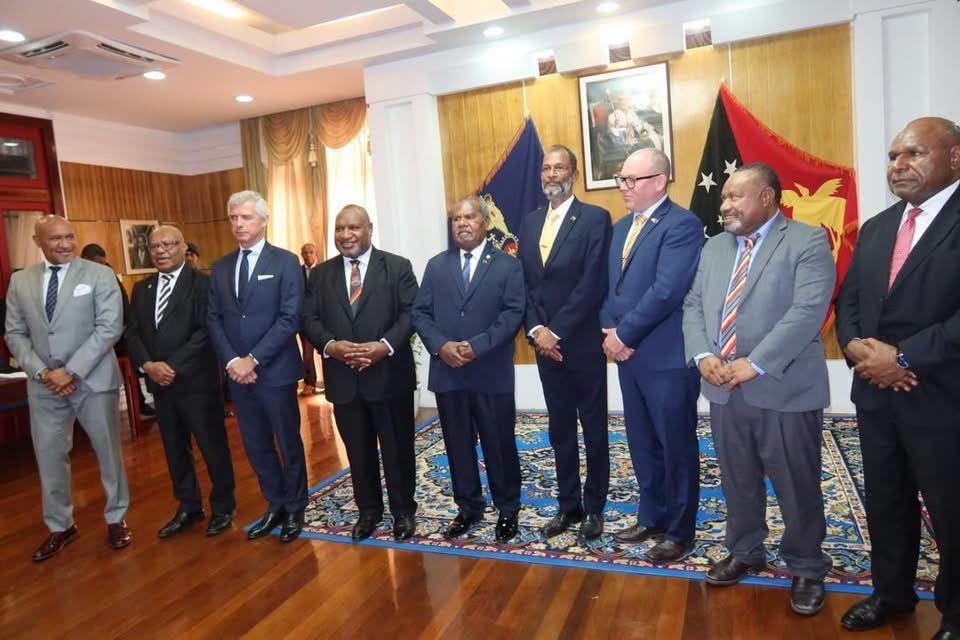
PORT MORESBY: Parliament has passed the legislative changes needed for the US$14.5 billion Papua LNG project, and the laws were certified on Friday. PNGCORE President and PNG Investment Week Convenor Anthony Smaré says a Final Investment Decision (FID) is now as close to certain as these things get, and PNG should prepare for the longest run of major project construction in its history.
“Papua LNG will be the first of several. Once the partners take FID we start building, and if we manage it well we won’t stop for a long time. P’nyang, Muruk, Pasca and Wildebeest are all lined up behind it. Put them together and PNG has twenty years of construction work in front of it,” Mr Smaré said.
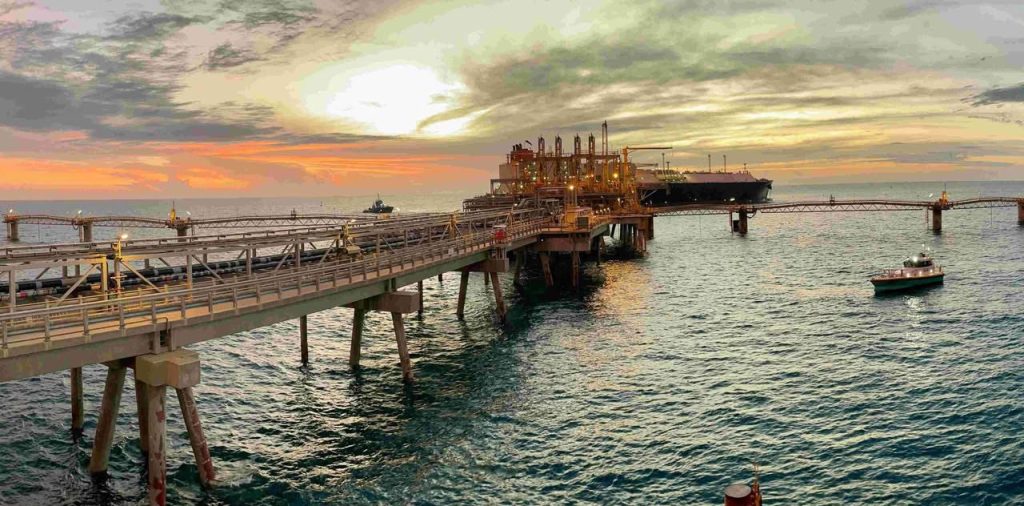
About US$60 billion in gas projects
Papua LNG is expected to cost about US$14.5 billion. P’nyang is estimated at about US$10 billion, Muruk at about US$3 billion and Twinza’s offshore Pasca project at about US$2.5 billion over two phases, which adds up to about US$30 billion. Wildebeest still has to be drilled out and proven, but if it is, it could cost up to US$30 billion on its own, taking the total to about US$60 billion. The Wafi-Golpu and Frieda River copper-gold projects would come on top of that.
“PNG LNG cost about US$19 billion and it changed our economy. If Wildebeest is proven, we are looking at about three times that in gas projects alone. I don’t think people here or overseas have fully realised what is coming,” he said.
Learning from PNG LNG
Mr Smaré said the bigger change would come from having projects follow one another, rather than one large project followed by a long gap.
“We learned a hard lesson with PNG LNG. More than 21,000 people worked on it at the peak of construction. When construction finished in 2014, the workforce dropped to around 2,000. The contractors packed up and left, people lost their jobs, and a lot of PNG businesses that had bought trucks and equipment and taken on staff for the project had nowhere to go next,” he said.
“If these projects are sequenced properly, and that is what the PNG Government and the developers are working towards, we don’t have to repeat that. A welder who finishes on Papua LNG can go straight to P’nyang. A company that builds a fabrication yard or runs a camp has a reason to keep it open and keep investing. People and businesses can move from one project to the next instead of being laid off at the end of each one. And the many PNG businesses that supply these contractors can keep supplying them from one project to the next.”
Mr Smaré said this gave PNG the chance to build a permanent construction and services industry of its own, with trained tradespeople and supervisors, fabrication and maintenance yards, engineering firms, equipment hire, camps, logistics and marine services, and banks willing to lend to them over longer terms because the risk is lower.
“Other resource countries built their supply industries on the back of a steady flow of projects. We now have that flow, and we should make the most of it,” he said.
What it means for investors
“Investors look for certainty,” Mr Smaré said. “One project on its own is a risk. A pipeline stretching over twenty years, led by ExxonMobil, Kumul Petroleum, Santos and their partners, gives a company good reason to invest in PNG for the long term, in workshops, yards, training, housing, power and transport, because those investments can be used on one project after another.”
“The companies that commit to PNG in the next couple of years will grow with this pipeline. Those that wait will find others have got there first.”
PNG Investment Week
Mr Smaré said PNG Investment Week 2026, at ICC Sydney from 29 November to 2 December, would be the first big gathering of government, investors, developers and contractors since Parliament passed the Papua LNG legislation.
“The timing could not be better. The Prime Minister and his ministers, the developers, the regulators, the financiers and businesses from PNG and overseas will all be there. Anyone who wants to be involved in PNG’s next twenty years should come to Sydney. We are seeing incredible interest from international contractors, suppliers and financiers,” he said.
The US$60 billion pipeline of potential gas projects, headlined by Papua LNG, will be the subject of speeches and panel discussions at PNG Investment Week by Prime Minister Hon. James Marape, Santos Managing Director and CEO Kevin Gallagher, ExxonMobil PNG Chairman and Managing Director Dinesh Sivasamboo and Kumul Petroleum Holdings Chairman Isaac Lupari. The Prime Minister opens the PNG Leaders Summit on Monday 30 November, and Papua LNG will feature in a dedicated session at the PNG Resources Investment Summit on Tuesday 1 December.